
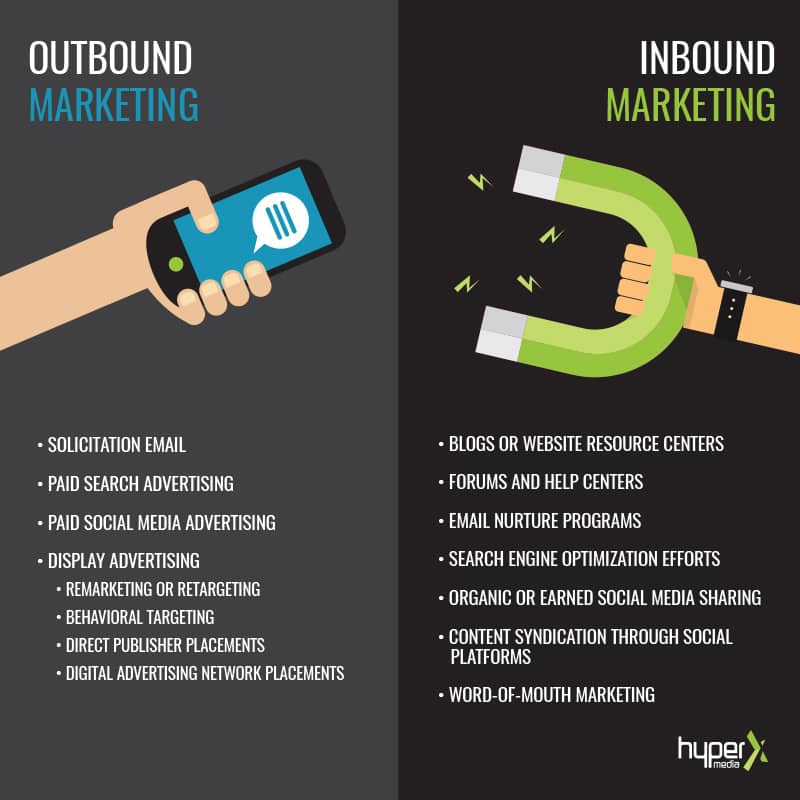
Do you suffer from not devoting or creating a strategy for inbound outbound marketing? Inbound attracts buyers already searching for solutions, while outbound puts your message in front of precisely the right prospects even when they are not yet looking. The highest-performing revenue teams orchestrate both approaches through shared data, unified messaging and continuous feedback loops.
Why Inbound Still Wins Hearts
- Compounding visibility: evergreen blog posts, videos and podcasts rank, resurface and generate leads long after launch.
- Trust by teaching: educational assets position your brand as a helpful expert, lowering sales resistance.
- First-party data: content downloads, newsletter sign-ups and community interactions fuel audience insights without third-party cookies.
- Scalable automation: marketing automation platforms nurture visitors into marketing qualified leads at marginal cost.
Why Outbound Still Closes Deals
- Precision targeting: intent data, firmographics and look-alike modelling let you reach only the accounts that match your ideal customer profile.
- Speed to pipeline: cold outreach, programmatic display and direct mail spark conversations before competitors appear on the radar.
- Account-based alignment: outbound lets sales personalize messaging by role and buying stage, accelerating complex B2B cycles.
- Predictable scale: dial up or down with budget rather than waiting for organic traffic to build.
Making the Two Work Together
- Shared ICP and personas: content teams create assets that address the very objections outbound reps hear on calls.
- Closed-loop analytics: CRM and BI tools trace revenue back to both first-touch (outbound webinar invite) and last-touch (inbound case study) to credit each channel accurately.
- Orchestrated sequences: paid social warms an audience, sales follows with personalised email, and content hubs capture demand when interest peaks.
- Centralised RevOps: a single team owns data hygiene, lead routing and SLA enforcement, ensuring no prospect slips through the cracks.
Modern Best Practices for Inbound Outbound Marketing Checklist
- Map every piece of content to a buying-stage question.
- Sync intent and engagement scores into one lead-scoring model.
- Enforce brand and message consistency across SDR scripts, ads and articles.
- Rotate fresh creative and subject lines every few weeks to fight fatigue.
- Test direct-response CTAs against ungated value offers to balance lead quantity and quality.
- Respect privacy laws: explicit opt-in for nurturing emails and clear ad-tracking disclosures.
Merging your inbound and outbound marketing efforts is the no-brainer way to accelerate the slow burn of your inbound marketing efforts. For example, paid and promoted outbound placements can support your inbound efforts by amplifying your reach and helping your collateral get discovered, like promoting a free ebook to Facebook users who have shown interest in similar content.
Think about how much more revenue you might see if you accompany your branding campaign with a content campaign, or balance your product promotion with content promotion. You’ll be creating opportunities to reach people throughout the buying cycle. Rather than just resonating with those that are ready to buy, you’ll also be educating, engaging, building trust with, and solving problems for those who are still in the earlier stages of interest. If you implement a nurture strategy, you’ll keep leads in the fold and usher them along the sales funnel until they are ready to purchase.
Ignoring the market segment that isn’t ready to buy right now means you’re disregarding most of the market. Rethinking your approach to outbound and using it in concert with inbound will help you reap the rewards of thoughtful, targeted paid marketing efforts.
Remember, inbound and outbound are opposite sides of the same coin: marketing. You shouldn’t favor one over the other; rather, you should implement both so you start capturing the full potential of your target market.
Need help integrating your inbound and outbound playbooks? Our MarketinOps consultants can design a unified framework that turns touchpoints into revenue.